
Mechanic Industrial Electronics
JOB ROLE
Electronics Mechanic; Electronic Equipment Mechanic repairs electronic equipment, such as computers, industrial controls. Tests faulty equipment and applies knowledge of functional operation of electronic units and systems to diagnose cause of malfunction. Tests electronic components and circuits to locate defects, using instruments, such as oscilloscopes, signal generators, ammeters and voltmeters. Replaces defective components and wiring and adjusts mechanical parts, using hand tools and soldering iron. Aligns, adjusts and calibrates testing instruments. Maintains records of repairs, calibrations and test. May install equipment in industrial or military establishments and in aircraft.
Electronics Fitter, General fits, assembles and repairs various kinds of electronic equipment in factory or workshop or at place of use. Examines drawings and wiring diagrams; checks parts for accuracy of fit and minor adjustments; assembles parts or mounts them on chassis or panels with aid of hand tools; installs and connects wiring, soldering joints equipment, diagnoses faults with aid of electronic testing equipment; dismantles equipment if required and replaces faulty parts or wiring.
Electronics Fitter, other include all other workers engaged in fitting, assembling, repairing and maintaining electronic equipment, machinery, appliances, etc., not elsewhere classified.
Electrical and Electronic Equipment Mechanics and Fitters and Related Workers, Other include all other workers engaged in fitting, assembling, repairing and maintaining electronic and electrical equipment, machinery, appliances, etc., not elsewhere classified.
Television Installation Man installs and adjusts television receivers and antennas, using hand tools. Selects antenna according to type of set and location of transmitting station. Bolts cross arms and dipole elements in position to assemble antenna. Secures antenna in place with bracket and guy wires, observing insurance codes and local ordinances to protect installation from lighting and other hazards. Drills and waterproofs holes in building to make passage for transmission line. Connects line between receiver and antenna and fastens it in place. Tunes receiver on all channels and adjusts screws to obtain desired density, linearity, focus and size of picture. Orients antenna and installs reflector to obtain strongest possible reception. May operate radio broadcasting unit.
Cable Television Installer installs cable television cables and equipment on customer's premises, using electrician's tools and test equipment: Measures television signal strength at utility pole, using electronic test equipment. Computes impedance of wire from pole to house to determine additional resistance needed for reducing signal to desired level. Installs terminal boxes and strings lead-in wires, using electrician's tools. Connects television set to cable system and valuates incoming signal. Adjusts and repairs cable system to ensure optimum reception. May collect installation fees and explain cable service operation to subscriber. May communicate with SUPERVISOR, using two-way radio or telephone, to receive instructions or technical advice and to report problems to be repaired. May report unauthorized use of cable system to SUPERVISOR. May clean and maintain tools, test equipment. Television Service and Repairman repairs and adjusts radios and television receivers, using hand tools and electronic testing instruments. Tunes receiver on all channels and observes audio and video characteristics to locate source of trouble. Adjusts controls to obtain desired density,
linearity, focus and size of picture. Examines chassis for defects. Tests voltages and resistance of circuits to isolate defect following schematic diagram and using voltmeter, oscilloscope, signal generator and other electronic testing instruments. Tests and changes tubes, solders loose connections and repairs or replaces defective parts, using hand tools and soldering iron. Repair radios and other audio equipment. May install television sets
Electronic Equipment Assemblers, Other include workers who assemble the components or parts of electronic equipment, according to strictly laid down procedures not elsewhere classified.
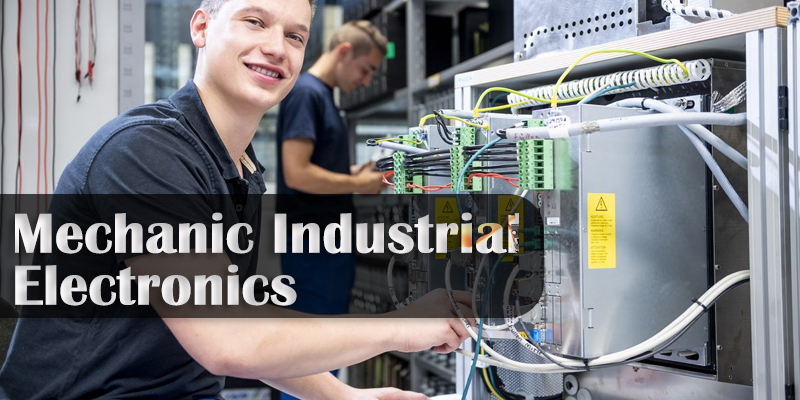
An Industrial Electronics Technician will not only install electrical components and systems associated with building automation, cable routing or technical equipment and their associated automation systems, but will also organize the installation of equipment and monitor all the related operational task.
An Industrial Electronics Technician will not only install electrical components and systems associated with building automation, cable routing or technical equipment and their associated automation systems, but will also organize the installation of equipment and monitor all the related operational task.
LEARNING OUTCOME
The following are minimum broad Common Occupational Skills/ Generic Learning Outcome after completion of the Mechanic industrial electronics course of 02 years duration under ATS.
Block I & II:-
- 1. Recognize & comply safe working practices, environment regulation and housekeeping. 2. Understand and explain different mathematical calculation & science in the field of study including basic electrical. [Different mathematical calculation & science -Work, Power & Energy, Algebra, Geometry & Mensuration, Trigonometry, Heat & Temperature, Levers & Simple machine, graph, Statistics, Centre of gravity, Power transmission, Pressure]
- 3. Interpret specifications, different engineering drawing and apply for different application in the field of work. [Different engineering drawing-Geometrical construction, Dimensioning, Layout, Method of representation, Symbol, scales, Different Projections, Machined components & different thread forms, Assembly drawing, Sectional views, Estimation of material, Electrical & electronic symbol]
- 4. Select and ascertain measuring instrument and measure dimension of components and record data.
- 5. Explain the concept in productivity, quality tools, and labour welfare legislation and apply such in day to day work to improve productivity & quality.
- 6. Explain energy conservation, global warming and pollution and contribute in day to day work by optimally using available resources.
- 7. Explain personnel finance, entrepreneurship and manage/organize related task in day to day work for personal & societal growth.
- 8. Plan and organize the work related to the occupation.
SPECIFIC LEARNING OUTCOME
Block – I
- 1. Perform basic mechanical workshop operations using suitable tools for fitting riveting, drilling etc observing suitable care & safety.
- 2. Test various electrical/electronic components using proper measuring instruments.
- 3. Configure, install, troubleshoot, upgrade, interconnect given computer system(s) and demonstrate &utilize application packages for different application.
- 4. Safety precaution while handling pc internal component.
- 5. Simulate and analyze the analog and digital circuits using Electronic simulator software.
- 6. Perform to Assemble, test and repair the various analog circuits and apply this knowledge to troubleshoot AF amplifier of PA system, fan regulator, light dimmer circuit, display systems, digital clock, digital timer and event counter.
- 7. Perform to Assemble various electronic circuits using SMD components and test them using suitable test equipment and perform the repair work on the PCB tracks.
- 8. Prepare, crimp, terminate and test various cables used in different electronics industries.
- 9. Demonstrate the proficiency in the constructional features of AM/FM communication receiver circuits and devices and trouble shoot them.
- 10. Perform to Dismantle, trouble shoot and replace the modules of a cell phone/smart phone and assemble.
Block – II
- 11. Perform to Assemble and test different industrial processes circuits by selecting appropriate instruments and suitable sensors.
- 12. Perform to Assemble and trouble shoot the SMPS, UPS and Inverter.
- 13. Explain and Understand and apply soldering & de-soldering of IC’s, SMD’s and other active & passive components.
- 14. Preparation of cable assembly, strapping, end preparation, crimping, braid, assemble and heat-sinkable sleeve, labeling & booting.
- 15. Perform to install Components mount and wiring of LRU’s (Line Replaceable Unit) and cabinets and racks.
- 16. Explain awareness about handling of ESD components and other sensitive components. [ ESD: Electro Static Device]
- 17. Identify electric drive systems and their role in various applications in industry.
- 18. Perform to Install, configure and demonstrate of AC/DC drives for industrial applications.
- 19. Perform test on how to Control the Electro pneumatic actuators using various pneumatic valves.
- 20. Perform to Read, interpret different induction on PLC modules and wire different field devices of PLC and configure the system and perform the suitable function.
Learning outcomes are reflection of total competencies of a trainee and assessment will be carried out as per assessment criteria.

| Workshop Calculation Semester 1 Jan 2018 |
| Workshop Calculation & Science Sem 2 Jan 2018 |
| Workshop Calculation Semester 3 July 2018 |
| Workshop Calculation Semester 3 Jan 2018 |

| Engg Drawing Semester 1 July 2017 |
| Engg Drawing Semester 4 July 2018 |
| Engg Drawing Semester 4 July 2017 |
| Engg Drawing Semester 4 January 2018 |
| Engg Drawing Semester 3 July 2018 |

Employability Skills Work Book
- AI को समझना
- AI कैसे काम करता है?
- AI क्या कर सकता है?
- AI के प्रकार
- AI से जुड़े करियर के बारे में जानना
- AI के साथ सीखना
- AI का ज़िम्मेदारी से इस्तेमाल
- AI क्या है?
| आईटीआई एम्प्लॉयबिलिटी स्किल्स 2019 - प्रश्न पत्र सेट 23 |
| आईटीआई एम्प्लॉयबिलिटी स्किल्स 2019 - प्रश्न पत्र सेट 24 |
| आईटीआई एम्प्लॉयबिलिटी स्किल्स 2019 - प्रश्न पत्र सेट 25 |
